Sunday, March 3, 2013

RS 6 Cliffhanger

This blog post is my analysis of the PBS Frontline video “Cliffhanger,” which aired on February 12, 2013. In this video, Frontline investigates the country’s problem of debt and deficit. The video talks about The US Federal deficit or the government spending more than what they are getting in revenue in the year. The fiscal cliff was the sharp decline because of increased taxes in 2013 due to the new term. With the mid-term election it split up the power between republicans and democrats. President Obama was faced with tough decisions and private meetings were set up to try and accomplish something. 

Debt is very bad for the economy and can truly hurt it. One major thing is lower the value of the dollar and is a crucial problem. The estimated time for the deficit to be reduced is in the year 2013 by about almost half. This can higher the unemployment, but increase the economic growth. We will see in this year to come, but it is truly something that has to be done. Everyone will be affect good or bad, but it is the only way for this to try to go away. 

Wednesday, February 13, 2013

RS 4 Would You Let a Coin Toss Determine Your Future?

This blog post is my analysis on the economics podcast “Would You Let a Coin Toss Decide Your Future,” by Katherine Mills. This podcast appeared on the Freakonomics Radio Podcast on January 31, 2013. In the podcast we discuss the options of flipping a coin to determine your future and quitting. Quitting is not something people like to do and want to be known for, but sometimes people just get tired of doing something they no longer love.  Freakonomics set up an experiment to flip a coin to determine peoples futures whether to quit or do something else. They are trying to see if the outcome of the coin gives new hope to that person or will they continue to do something they do not like
 and be upset. 


I think that flipping a coin or playing rock, paper, scissors such as Daniel Harrington tell us is a different way to make decisions rather than sit there and way every outcome of your decision and be stressed, but not on something that will change your life. I understand this might have worked for him, but just flipping a coin and letting your fate rely on heads or tails is crazy. Risk and reward can be different for every decision and getting the wrong side of the coin can hurt your future.  In my opinion I would rather weigh my options and go by what i believe is the right choice, not some lucky flip. If i make the wrong decision I could know that it was me that did it and not what could have been if i tossed the coin a little higher.

RS 3 A New Mom and the President of Iceland

This blog post is my analysis on the economic podcast “Episode 267: A New Mom and the President of Iceland.” This podcast appeared on the planet money website on February 1, 2013. In 2008 Iceland was hit hard with the recession and suffered a huge financial crisis. Major banks in the country fell and people that invested in places like the UK and the Netherlands were unable to take their money out. 

The President of Iceland made a decision to not reimburse the people who invested their money with the banks to lower the losses that Iceland was going through. A vote was set up for the Iceland people to vote "yes" or 'no" on whether or not the investors should receive their money back, and majority voted no. 

The British and Dutch were not to happy about this and filed a lawsuit against Iceland for their money back. Luckily Iceland was in favor on the suit and did not have to pay back all the money. I think that this is a really tough situation to be in the middle of, but thats life. The people who invested in these banks could have put their money any where else, but chose here. It is like investing in a stock and it losing money. You know the risks.  


Thursday, January 31, 2013

RS 2: A Billion-Dollar Bet Against Weight-Loss Shakes


This blog post is an analysis on the economic podcast “A Billion-Dollar Bet Against Weight Loss Shakes.”  This podcast appeared on the planet money website on January 18, 2013. The podcast involves a billion dollar company named Herbalife  and complications that are arising around them. Bill Ackman a hedge fund manager has went against this company and has made his voice heard that he believes this company is a pyramid scheme. He is so confident and wants it to be right, that he has shorted the Herbalife stock which is traded on the New York Stock Exchange "ONE BILLION DOLLARS". 


On this I stand behind Ackman. I also believe the company is a fraud and a pyramid scheme like many others like the make-up door to door companies and similar to Cutco knife sales. Though he has such a strong feeling a billion dollar wager in shorting a stock of a company that has been successful for 30 years is risky. WIth saying that i have never even heard of the products this company sells. Being a four billion dollar company with no advertisement and research and development money being spent, something has to be up. 


After Ackman came out and said that Herbalife is a pyramid scheme in a 300 slide powerpoint on the company the companies stock dropped 14.6 points. This also is what Ackman wants. Shortening the stock he will make money every time it drops and hopes that it will fall to zero. On his part it could be smart that he went to the public and was so outspoken because it will shake the people and the stock up. Who knows where these products are being sold after the venders let other people sell it or who it is going to. The company obviously doesn't care about being a healthy company, but making money being a pyramid scheme. 

Wednesday, January 23, 2013

RS 1 How to Be a Genius


This blog post is my analysis on the article “How to Be a Genius” by David Dobbs. This article appeared in the September 2006 edition of the New Scientist. People are not made a genius, but it is up to them to become one. Some humans may be born with more talents physically or mentally, but much effort has to be put in to maintain it. Even as a child author David Hobbs could have been set out for greatness says his mother. Hobbs realized later in life that his early gift would soon run out. Only when he put in more work and effort than usual he would see that he was getting somewhere. What is trying to be said is that you have to put work in to succeed. The more work and effort you apply to your work the better or smarter you will be at it. Examples of greats that’s put in effort to become a genius at what they do are Einstein, Hawking, Newton, and even athletically speaking Michael Jordan, Lebron James, Tiger Woods, and Pete Sampras. These people all have in common that they worked extra hours to be a genius at what they do.


Stephen Hawking’s take on IQ is that it has no relations to someone’s ability to be a genius. Hawking was an average student until his mid twenties when his work ethic became more serious. Hawking says, “People who boast about their IQ are losers.” I believe in this statement because anybody can be good at taking a test, but their ability to apply it to something meaningful is a lot tougher. Even as Dobbs says in the article, his co-workers too have talent. It is their work ethic that will set them apart from someone else.


I truly found this article something that I believe in. I can relate to this in ways of when it comes to school. The more I study or put into a class, the better I usually do or understand that material. It can be motivational to some to put more work in and see better results. 

From last reading and writing this I still stand behind what Dobbs says. After last semester I tried to imply what he said and put a better effort in towards my work and ethics that I believed I knew more about what I was studying. I had my best semester yet and hope to stay on the path of to doing more than what I think I need to. 


Monday, November 26, 2012

RS 9: Why the Price of Coke Didn't Change for 70 Years


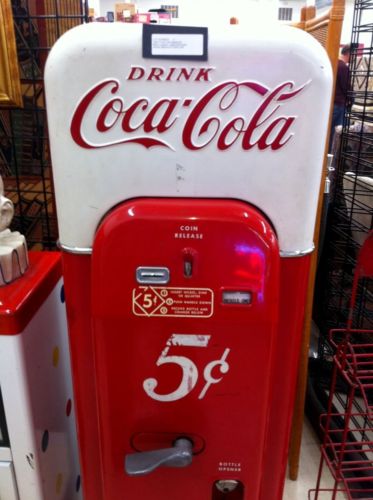
This blog post is my analysis on the economic podcast “Episode 416: Why the Price of Coke Didn’t Change for 70 Years.” This podcast appeared on the planet money website on November 13, 2012. The podcast summarizes how The Coca Cola Company used the strategy of having a fixed cost for 70 years. The price of coke was only 5 cents for 70 whole years. The way the company did this was advertising that their product was only 5 cents.. This made it that the retailers were unable to charge a higher price than what was being told. The contract of the fixed cost be Coca Cola was unable to change because so. People may have thought at first that the companies plan to charge at a fixed rate would be dumb, but I think their smart business strategy to advertise made it irrelevant. Another way they maintained the fixed cost was because of their vending machines. Coca Cola company manufactured their own vending machines where the machine would only take one coin. That coin was a nickel. After later trying to have Eisenhower issue a 7.5 coin value Coke was turned down. 
The Coca Cola Company is a very smart Company and is why they have been around for so long. It would have been great only paying a nickel for a soda, but thats not the world we live in today. With tons of competition the price values rise and drop. A soda today ranges from about $1.50 to $2.00. Coke is still a major power in the beverage distribution and their business strategy has to do with that.

Thursday, November 15, 2012

RS 8: Manufacturing the Song of the Summer

This blog post is my analysis on the economic podcast “Manufacturing the Song of the Summer” by Planet Money. This podcast appeared on the Planet Money website on July 8, 2011. This podcast is an overview of how a hit song is made and costs. I figured it was expensive to make a song, but did not realize the exact amounts. According to the podcast to make a hit song costs over a million dollars. This cost is before the song is even a hit! The risk for this can be good or bad. If the song is good it will be played by everyone, but if not you pay all this money to make a crap song. If you think about the amounts of money the top artists make this is not that much to them. Most do not even write their own songs and is part of the costs to make the song. 

One thing I disagree with the whole music industry is how they cannot pay 
to put their songs on the radio. This is called payola. Companies can pay to put advertisements on the radio, but artists cannot for their music. This does not make much sense to me at all. I think they should be able to without having a problem. They get around this by treating these people good. They take them out to nice places and give them nice gifts. This helps them remember who was nice to them and throw their song on the air for a few spins.